A broken spring is usually obvious — but not always. Watch for these five signs.
A loud bang from the garage
The classic sign of a torsion spring snapping under tension.
Uneven or Crooked Door
Door opens unevenly or looks crooked on the tracks.
Loose or Slack Cables
Loose or slack cables on one side of the door.
Heavy or Unresponsive Door
Door won’t open or feels much heavier than usual.
Visible Spring Separation
A visible gap or separation in the coil itself.
Door Drops or Closes Too Quickly
The garage door drops suddenly or closes too quickly.
If you notice any of these, stop using the opener. Continuing to operate a door with a failed spring puts extra strain on the motor and can turn a straightforward repair into a bigger bill.
Torsion Springs vs Extension Springs
Torsion
Mounted on a metal shaft above the door, torsion springs twist to store the energy that lifts it. They’re generally more durable and controlled, which is why they’ve become the standard on newer installations.
Extention
Extension springs stretch along the horizontal tracks on either side of the door. They are more common on older doors and some lighter setups,and are less frequently used on modern installations.
Both types fail the same way over time, and both need a technician to replace safely — a spring holds enough stored tension to cause serious injury if it releases unexpectedly.
⚠ Not a DIY job
A garage door spring holds enough stored tension to cause serious injury if it releases unexpectedly.
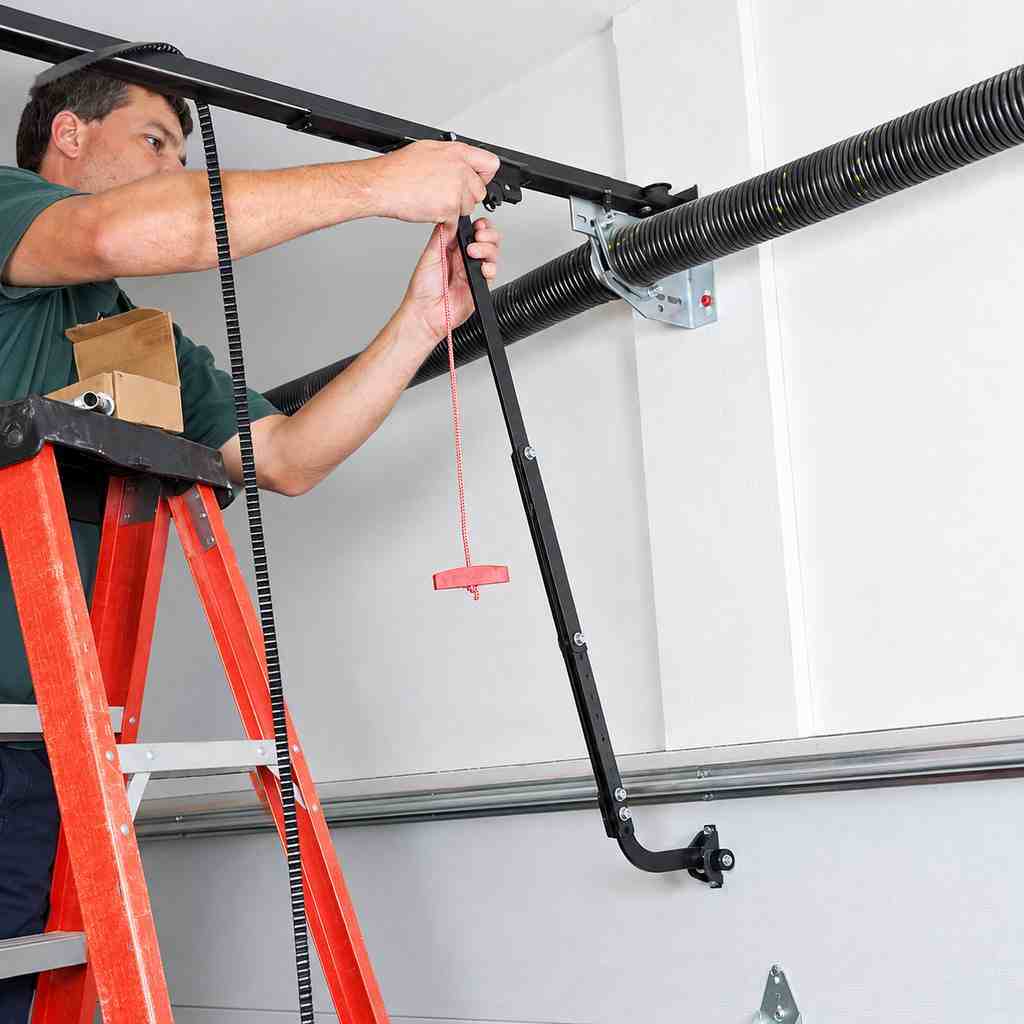
This isn’t a job for a Saturday afternoon and a video tutorial. Professional replacement uses the right tools, the correctly rated spring for your door’s weight, and a proper balance test afterward — so the door doesn’t just work again, it works safely.
Why Geelong Springs Wear Out Faster
Corio Bay’s salt air is harder on exposed steel than most people expect. Springs, cables, and hardware corrode faster on coastal and near-bay properties than they would inland — often meaning earlier failure than the door’s official lifespan would suggest.
Marine-grade springs available for coastal homes
What Happens When You Call Us
1
Diagnosis
A few questions to understand the fault.
2
Inspection
Full on-site check of the door and springs.
3
Quotation
Clear fixed price given before any work.
4
Replacement
Correct new spring fitted to suit your door.
5
Testing
Door rebalanced and checked before we leave.
How Much Does Garage Door Spring Repair Cost?
Exact pricing depends on your door’s size, spring type, and hardware condition. We’ll always confirm the price before starting any work.
Single spring replacement
$180–$350
Correct spring type & rating for your door
Balance test & safety check
Price confirmed before work starts
Recommended
Both spring replacement
$180–$350
Correct spring type & rating for your door
Balance test & safety check
Price confirmed before work starts
Frequently Asked Questions
Can I still open my garage door with a broken spring?
Not safely, and often not at all. Without the spring’s counterbalance, the door can weigh 50kg or more to lift manually, and forcing it can damage the tracks, cables, or opener motor. Call a technician rather than attempting to force it open.
How long do garage door springs last?
Most torsion springs are rated for around 10,000–15,000 open-close cycles — roughly 7 to 10 years of typical daily use. Coastal exposure, frequency of use, and door weight can shorten that considerably.
Do you replace one spring or both?
If your door has two springs and one has failed, we’ll generally recommend replacing both. They wear at a similar rate, and the second is usually close to failing anyway — replacing both avoids paying for a second callout a few months later.
How long does the repair take?
Most spring replacements are completed within an hour or two once a technician is on-site, door and access permitting.
Broken spring? We can be there today.
Don’t force a heavy door or try to fix it yourself. Call or request a free quote and we’ll get a technician out fast.